
Simple Garage Cabinet Maintenance Routine That Covers the Whole Year
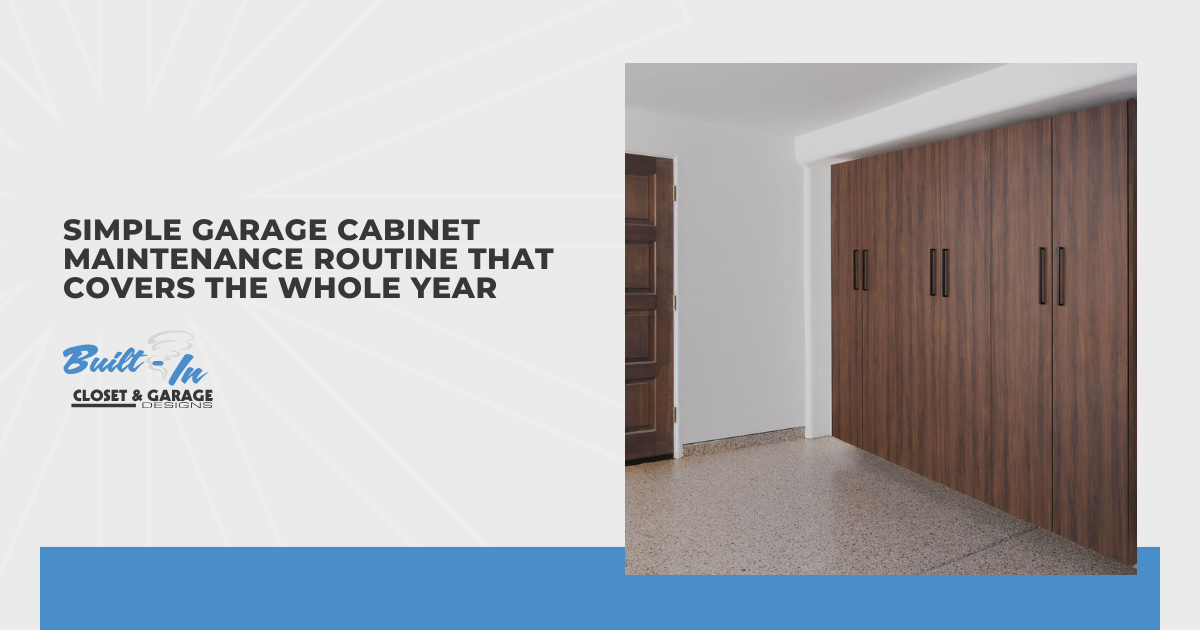
Your garage cabinets take a beating every single day, and most of it happens so gradually you barely notice. Heat warps, humidity seeps in, dust settles, and hardware loosens one use at a time until something finally gives. As someone who's watched perfectly good garage cabinets age poorly well before their time, I can tell you the problem is rarely the quality of the cabinet. It's the absence of a routine.
Fortunately, building that routine doesn't require much. A few seconds of attention daily, a few minutes weekly, and a more thorough check at longer intervals is all it takes to stay ahead of the wear. Neglect compounds quietly until the damage becomes impossible to ignore, but consistent care compounds too. Every small act of maintenance adds up to a cabinet system that looks and functions like new far longer than one left entirely to chance.
Here's what a full year of garage cabinet maintenance actually looks like, broken down into intervals that fit into any schedule.
- Daily: The 60-second habit
- Weekly: The 10-minute walkthrough
- Monthly: The quick check-in
- Quarterly: The deep dive
- Yearly: The full reset
- Seasonal: Staying ahead of the weather
Keep reading and you'll have a maintenance routine you can actually stick to by the time you're done.
Daily: The 60-Second Habit
A quick minute of attention each day is genuinely all it takes to stay ahead of the most common cabinet issues. Habits this simple are easy to overlook, but their cumulative effect over weeks and months is anything but.
- Wipe down surfaces: A quick pass with a dry or slightly damp cloth removes dust and debris before it has a chance to settle into hinges, drawer tracks, and cabinet edges.
- Close doors and drawers properly: Leaving cabinet doors ajar or drawers partially open puts unnecessary stress on hinges and slides, accelerating wear over time.
- Check for spills or moisture: A quick visual scan for any liquid spills or moisture around the base of your cabinets takes seconds and prevents the kind of damage that's far harder to fix later.
- Put things back where they belong: Overloaded or improperly loaded cabinets strain shelves, doors, and hardware faster than almost anything else.
- Avoid slamming doors and drawers: The repeated impact of forceful closing is one of the fastest ways to wear out hinges and drawer slides prematurely.
Done consistently, these five habits take less time than making a cup of coffee. Skip them long enough, though, and your cabinets will let you know.
Weekly: The 10-Minute Walkthrough
Daily habits keep things tidy, but it's the weekly walkthrough where you start catching the issues that aren't immediately obvious. A focused 10 minutes once a week gives you a clearer picture of how your cabinets are holding up.
- Clean cabinet interiors: Empty each cabinet section and wipe down the interior surfaces, removing dust, debris, and any residue left behind by stored items.
- Inspect hinges and handles: A quick check of every hinge, handle, and drawer pull identifies any that have started to loosen before they become a functional problem.
- Check drawer slides: Open and close every drawer deliberately, feeling for any resistance, wobbling, or misalignment that wasn't there the week before.
- Look for moisture or staining: Check the interior corners, base, and back panels of each cabinet for any signs of moisture intrusion, staining, or discoloration.
- Wipe down cabinet exteriors: A slightly damp microfiber cloth on the exterior surfaces keeps finishes looking fresh and prevents buildup from hardening over time.
Most people are surprised by how much a weekly walkthrough reveals once they start doing it consistently. In my experience, catching issues at this stage is almost always a matter of a quick fix rather than a costly repair.
Monthly: The Quick Check-In
Wear accumulates in ways that aren't always visible until you know exactly what to look for. Once a month, take a closer look at the details your weekly walkthrough simply doesn't have time to catch.
- Tighten loose hardware: Go through every hinge, handle, drawer pull, and mounting screw with a screwdriver, tightening anything that's worked itself loose over the past month.
- Check cabinet alignment: Open and close every door and drawer, looking for any that have shifted out of alignment, are rubbing against adjacent surfaces, or aren't closing flush.
- Inspect surface condition: Look closely at the cabinet finish for any scratches, chips, or areas where the coating has started to wear, addressing minor damage before it has a chance to spread.
- Clean cabinet feet and base: Wipe down the base of freestanding cabinets and check underneath for moisture, debris, or anything that shouldn't be there.
- Assess storage load: Take stock of how each cabinet is loaded and redistribute weight where needed to prevent shelves, doors, and hardware from bearing more than they're designed to handle.
Put it on your calendar and treat it like any other non-negotiable household task you can't skip. Thirty minutes once a month is a small price to pay for a cabinet system that holds its condition year after year.
Quarterly: The Deep Dive
Between monthly check-ins and the annual reset, this is where the deeper, slower-moving issues get the attention they need. Quarterly is the sweet spot between too soon and too late.
- Check for moisture damage: Inspect all cabinet surfaces, joints, and back panels for any signs of warping, swelling, or discoloration caused by moisture exposure.
- Inspect cabinet seals and caulking: Check any seals or caulking around wall-mounted cabinets and address any gaps or cracks before moisture finds its way in.
- Lubricate hinges and drawer slides: A small amount of appropriate lubricant on hinges, drawer slides, and any moving hardware keeps everything operating smoothly and quietly.
- Check ventilation around cabinets: Make sure air can circulate freely around and behind your cabinets, particularly in areas prone to heat and humidity buildup.
- Assess structural integrity: Push and pull on wall-mounted cabinets firmly to confirm they're still securely anchored, checking that no mounting hardware has worked itself loose.
Quarterly checks are where you catch the kind of wear that builds up slowly and quietly between monthly inspections. Address what you find here promptly and your annual reset becomes a formality rather than a project.
Yearly: The Full Reset
Everything else in this routine keeps your cabinets functional day to day, but none of it replaces what a proper annual reset accomplishes. In my experience, this is where the full picture finally comes into focus.
- Deep clean all surfaces: Remove everything from every cabinet and give all interior and exterior surfaces a thorough clean, including areas that don't get touched during regular maintenance.
- Inspect and replace worn hardware: Check every hinge, drawer slide, handle, and mounting screw for signs of wear, replacing anything that's no longer functioning as it should.
- Assess finish condition: Look closely at the entire cabinet system for fading, chipping, peeling, or scratching, addressing any finish damage before it has a chance to worsen.
- Check structural integrity: Go beyond the quarterly push-and-pull test and examine every joint, panel, and mounting point for signs of stress, shifting, or deterioration.
- Review and reorganize storage: Treat the annual reset as an opportunity to completely reassess how your garage is organized, removing items that no longer belong and optimizing the layout for how your needs have evolved.
Do it thoroughly, do it honestly, and your cabinet system will reward you with years of reliable performance. Few hours spent on home maintenance deliver a better return than this one does.
Seasonal: Staying Ahead of the Weather
Heat, humidity, and temperature swings are the three forces most likely to compromise your cabinets over time, and each season brings its own version of that threat. A few targeted adjustments at the turn of each season go a long way toward keeping your cabinets in peak condition year-round.
Summer brings the most intense conditions, with heat and humidity accelerating wear on finishes, hardware, and structural components. Check your cabinet finishes for fading, bubbling, or peeling and address them before they spread. Make sure garage ventilation is working effectively, as poor airflow creates pockets of heat and moisture that are particularly damaging to cabinet interiors. Chemicals, paints, and other heat-sensitive items should be checked for integrity and relocated if necessary.
Cooler months bring condensation, which forms when warm air meets cold surfaces and creates moisture where it doesn't belong. Check cabinet interiors, back panels, and base units for any signs of moisture during these periods. Hardware is especially vulnerable to corrosion during cooler, more humid stretches, so inspect hinges, drawer slides, and mounting screws at every seasonal transition. Keeping the garage well-ventilated and maintaining a consistent temperature manages the conditions that seasonal shifts create.
Conclusion
A well-maintained set of garage cabinets doesn't happen by accident; it happens because someone showed up consistently at every interval this routine covers. Daily habits prevent the small stuff from piling up, weekly and monthly checks catch what daily attention misses, and quarterly and annual resets keep the bigger picture in focus. Seasonal adjustments ensure your cabinets are always prepared for whatever conditions the weather brings. Put this routine into practice and your cabinet system will look and perform at its best for years to come.

QUICK LINKS
CONTACT INFO
Built-In Closet and Garage Designs
11692 Mantova Bay Cir, Boynton Beach, FL, 33473
Phone
New Paragraph
SCHEDULE A CONSULTATION
Contact us, and we will come out and discuss your project free of charge.