
Signs Your Current Home Office Setup No Longer Fits the Way You Work
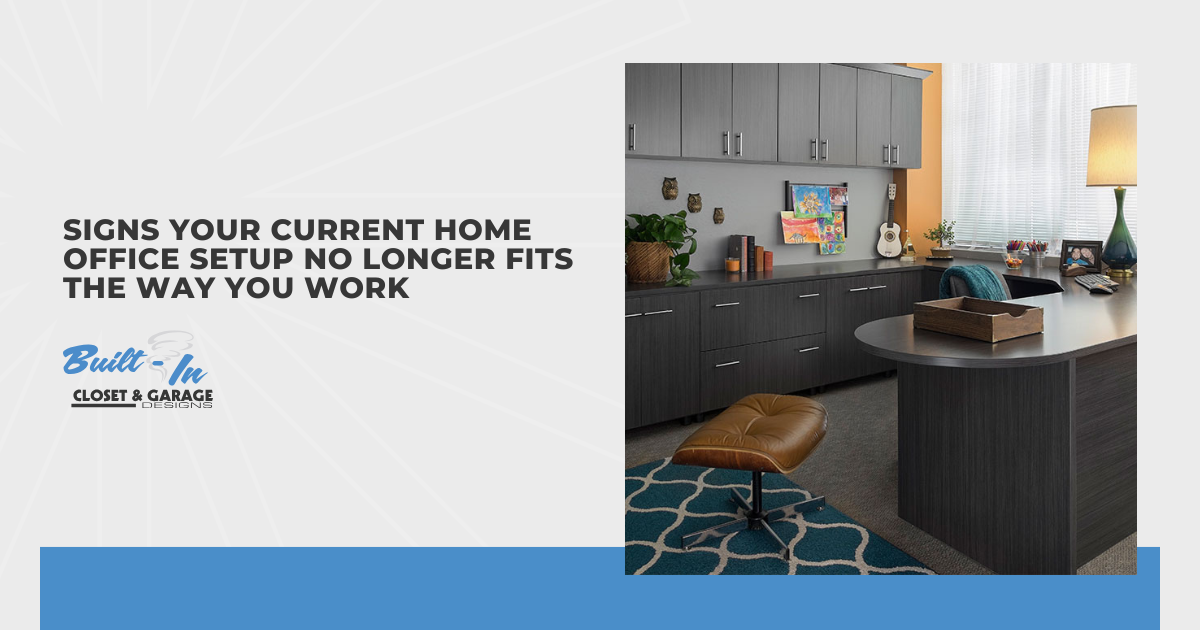
Your home office probably looks the same as it did a year ago, but it doesn't work the same way anymore. Work habits shift in tiny increments nobody tracks: one more video call added here, a new hobby stacked in there, until the room quietly falls out of step with real life. I often feel that gap the moment I walk into a house, usually before the homeowner can put words to what's bothering them. It shows up in three places most people never think to connect, starting with something you'll feel before you ever see it in the room.
The first sign is an old ache creeping back into your lower back by three o'clock, even though nothing about your chair has changed since last year. The second follows close behind: bins that used to swallow every loose cord and folder now spill onto the floor, because your day outgrew the shelf built for last year's day. Glare across the screen by mid-afternoon rounds out the third, usually waved off as "just how the room is" instead of the fix it's actually asking for. None of these show up because your desk or your chair actually failed; they show up because your day changed and your home office never caught up, and that gap is the real problem worth solving.
Once you see that gap sitting behind them, every other sign your home office has fallen out of step becomes just as easy to spot. Each one below points to a specific mismatch worth fixing on its own:
- Tasks are competing for the same space
- Storage no longer matches how you actually use the room
- Furniture fights you instead of working with you
- Your tech has outgrown your outlets and cords
- Heat, humidity, or glare make the room hard to work in
- Noise or lack of privacy keeps interrupting your work
- Long work sessions leave you uncomfortable
- Nothing resets the room between uses
Every sign on this list traces back to one decision made long before any of them showed up.
Tasks Are Competing for the Same Space
Home offices almost always start built around one task, usually just a laptop and a video call. I always ask what the desk was set up for originally, because that's usually the whole answer to why it's fighting three jobs now instead of one. Homework crept in at some point, probably at the kitchen table first, until it just moved into the office for good. Then a hobby project claimed whatever corner was left, and nobody actually decided any of that on purpose.
Your desk didn't change. What you're asking it to do every day did. A laptop gets shoved aside for a school folder, or a half-finished project gets swept into a drawer because a call starts in five minutes, and both of those are the same problem wearing a different outfit. I pay more attention to which task loses that fight than to how the room looks when nobody's using it, because an empty desk hides everything that's actually wrong with it.
Going back to that first, never-really-made decision is where the fix starts. Write down what actually happens at that desk all week, not what it was supposed to be for. A five-minute list usually tells me more than a full walkthrough does, since it's the only thing that shows every task competing for the same six feet of space. Give each one even a small stretch of desk that's just theirs, and the daily scramble mostly stops on its own.
Storage No Longer Matches How You Actually Use the Room
Storage stops working the moment your habits move faster than the bins meant to hold them. Baskets that used to disappear under your desk now sit half full while a completely different pile grows right next to them. Bills, chargers, and old school folders crammed into one drawer usually mean three separate systems collapsed into a single space. Full bins earn their keep with me, while empty, tidy-looking ones just make me ask what they're actually for. None of that happened because you got messier, since what you're storing simply changed and the storage never caught up.
Papers pile on top of a filing cabinet instead of inside it once the folders inside stop matching what actually needs filing. Kids' school papers and your own bills competing for the same drawer is a clear sign one storage system is doing two jobs. Whatever gets picked up and set back down in the same spot the most during a week is almost always pointing at the real gap. Labeling gets blamed for messes it never actually caused, since the mismatch was already there before a single label went on.
Supplies sorted by task, rather than by category alone, usually surface the gaps in your storage fast. Bigger bins placed near where you actually use them solve more of this than replacing the whole system ever does. I'd rather fix the one drawer causing friction than overhaul a system that's mostly working. Small swaps like that tend to stick, since they don't ask you to change habits that were already working fine. Once storage matches what your week actually looks like, the floor stops being the backup plan.
Furniture Fights You Instead of Working With You
Furniture chosen years ago rarely matches the equipment sitting on it today. Desks deep enough for an old, bulky monitor now leave open space around a slim laptop stand. Drawer handles that never used to catch on anything now snag your sleeve every time you reach past a cart that wasn't there a year ago. Weight matters less to me than proportion, since a desk can be sturdy and still be completely wrong for what's on it now.
Smaller shifts give away the same mismatch in ways easy to miss. Wobble that never bothered you before starts mattering once a laptop spends six hours a day on that surface instead of twenty minutes. Uneven legs on an older desk show up fast on certain flooring, tilting just enough to send your coffee toward the edge. Armrests that fit your old desk perfectly can suddenly hit the new one at exactly the wrong height, forcing your shoulders into an angle they weren't built for. Nobody mentions the armrest first. The neck ache usually gets blamed instead.
Furniture earns its keep again once it gets measured against what's sitting on it now instead of what it was bought for originally. Shallow desks or taller carts usually solve more of this than replacing everything at once. One swapped piece fixes more of this than a full room redesign ever does. Furniture that fits what you're doing right now stops fighting you the moment it's back in proportion with what sits on it.
Your Tech Has Outgrown Your Outlets and Cords
One more monitor, a second laptop dock, or a printer added later usually pushes your outlets past what they were ever wired for. Outlet count is the first thing I look for in a room like this, before a single cable gets touched. Power strips stacked on power strips are the clearest sign of overload, even when everything still technically works. Extension cords running across the floor toward a farther outlet usually mean the nearest one filled up months ago. None of that means your wiring failed. It means the tech in the room grew past what the outlets were built for.
Quieter signs give away the same overload, and I catch most of them by looking at cables instead of devices. Wi-Fi dropping the moment your desk moved to the far side of the room is a sign the tech changed faster than the setup around it. Cables tangled three deep behind your desk usually point to devices added one at a time with no real plan for where they'd plug in. Nothing about that tangle means anyone did something wrong.
One extra outlet, or a surge-protected strip mounted under the desk, usually solves more than buying new furniture ever would. Wireless charging pads clear half the cable clutter on their own, since fewer devices need a cord running to them at all. Routers moved a few feet often fix problems new hardware never will, saving most people money they didn't need to spend. Placement solves more Wi-Fi problems for me than hardware ever does. Once your outlets match what's plugged into them, the floor stops doubling as an extension cord's parking lot.
Heat, Humidity, or Glare Make the Room Hard to Work In
Afternoon sun through a west-facing window can turn a comfortable desk into one you avoid by two o'clock. Humidity thick enough to curl paper at the edges is a sign the room's air isn't handling its job the way the rest of the house does. Screens washed out by glare force your eyes to squint through half the workday without anyone noticing why. Glare tells me more about a window's problem than any measurement ever does.
None of these problems mean the room is beyond fixing. Laptops running warmer than usual by midafternoon often have nothing to do with the laptop itself. Heat radiating off a window all day is usually the real cause. Sticky air settling into a room by early afternoon means the space isn't getting the airflow the rest of the house gets. I usually notice curling paper first, long before anyone mentions the heat out loud.
Blackout or solar-tinted shades cut glare and heat at the same time, without losing the light you actually want in the room. Small ceiling fans, or a portable unit aimed at just that corner, handle what central air can't reach on its own. I'd choose humidity-resistant storage over anything decorative in a room like this, since paper and cardboard lose that fight fast. Even a few feet of distance from direct sun exposure solves more of this than any curtain ever could.
Noise or Lack of Privacy Keeps Interrupting Your Work
Background noise derailing the same call every single time usually points to something predictable in the room's layout. Half-open doorways let far more sound through than most people expect, especially once foot traffic on the other side picks up at certain hours. Tile and hard flooring common in a lot of homes carry footsteps and voices further than carpet ever would. Timing tells me more about the source of noise than the room itself does.
Doors that never get closed during work hours are a sign privacy got deprioritized long before noise became the bigger complaint. Family members walking through mid-call aren't usually being careless. They're just unaware the room doubles as anything more than a hallway. Nobody interrupting a call on purpose is something I take for granted going in. Where people cut through your house without thinking twice tells me more about a privacy problem than the door itself does.
Curtains or a sliding panel across an open doorway solve the privacy half of this without the cost of adding an actual door. Noise-canceling headphones work as a fast stopgap for calls while a more permanent fix gets planned out. I'd move your desk before asking your whole household to stay quiet, since only one of those actually works long-term. Focused work moved to a quieter hour of the day, instead of fighting the noisiest one head-on, sidesteps half the problem before it starts.
Long Work Sessions Leave You Uncomfortable
Neck stiffness that shows up by early afternoon almost always traces back to a screen sitting lower than your eyeline rather than to the chair underneath you. Shoulders tell me more after twenty minutes at a desk than any measurement I could take. Wrists that ache after typing usually point to a keyboard angled wrong rather than to weak wrists or bad luck. Eyes that feel gritty by four o'clock are a screen-distance problem more often than a lighting one.
Monitor height is the first adjustment I make in a room like this, and it fixes more than people expect. Monitors sitting even two inches too low force your chin down for hours without you ever noticing the angle causing it. Mouse placement set too far to the side adds up to real shoulder strain by the end of a long day, even though each individual reach feels harmless. Keyboards left flat on the desk, instead of tilted slightly toward you, are a common reason wrists start complaining first. None of this points to a health problem so much as a setup that was never measured against your body in the first place.
Monitor risers, even a stack of sturdy books, bring a screen up to your eye level for almost nothing. Keyboard trays that tilt slightly downward take pressure off your wrists in a way flat desks rarely can. Real fixes come from measuring a setup against your own body instead of a generic standard, and most of them cost nothing at all. I ask clients to stand once for every long stretch of sitting, nothing fancier than that.
Nothing Resets the Room Between Uses
End-of-day leftovers tell me the real story before anything that happened earlier in the day does. Desks that look exactly the same at nine at night as they did at nine that morning usually mean nothing reset them in between. Papers from a morning call still sitting out during an evening hobby session point to the same gap. Whatever's still out three tasks after it was needed is usually the clearest sign a room never got a real close-out routine.
Chargers left plugged in from a call that ended hours ago usually mean nobody closed that task out. They just stopped doing it. Schoolwork folders still sitting where they landed at three o'clock, well into the evening, mean nothing physically signaled the task was finished. Something physical works better than any reminder app, in my experience, since it's harder to ignore than a notification. Nothing about that gap means anyone's being careless.
I check a routine's health by how fast a room fills back up, nothing more complicated than that. Five minutes at the end of the day, spent closing out the room instead of leaving it, beats a deep clean that only happens once the room's already a mess. One dedicated home for shared items, even a single labeled bin, ends the daily hunt for whatever got set down somewhere new. Routines built around a physical cue keep working long after the season or schedule that inspired them changes.
Conclusion
The fixes behind these signs share the same shape: a bin resized, a desk swapped for one that actually fits, an outlet added, a light or shade adjusted, a door closed at the right hour, a chair raised an inch, or five minutes spent resetting the room before you walk away from it. None of that adds up to a renovation, and that's the part most people don't expect going in. Left alone long enough, small mismatches like these tend to compound instead of staying small. Handled even one at a time, your home office starts keeping pace with what you actually ask of it every day.

QUICK LINKS
CONTACT INFO
Built-In Closet and Garage Designs
11692 Mantova Bay Cir, Boynton Beach, FL, 33473
Phone
New Paragraph
SCHEDULE A CONSULTATION
Contact us, and we will come out and discuss your project free of charge.